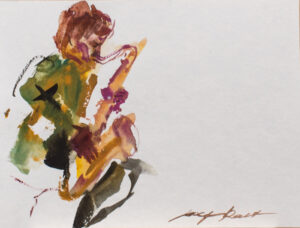
Form — Translating Three Dimensions into Two
Form is the challenge at the heart of all representational art: how do you render the three-dimensional world onto a flat surface in a way that is convincing, expressive, and true?
In the first cycle of creativity, form study encompasses:
- Doodling- Remembering Childhood
- Scribling- Subconscious knowing
- Principles of Form Building — understanding how objects occupy space and cast shadow
- Composition — the organisation of visual elements within the picture plane
- Perspective — both linear and aerial, the systems by which depth is created
- Linear Drawing — the use of line as the primary tool of form description
- Non-Linear Approaches — building form through tone, texture, and mass rather than outline
- Measuring — the practical skills of proportion, scale, and accurate observation
These tools are not rules to be followed mechanically. They are a language to be learned and then, in time, spoken naturally — without having to think about the grammar.r-