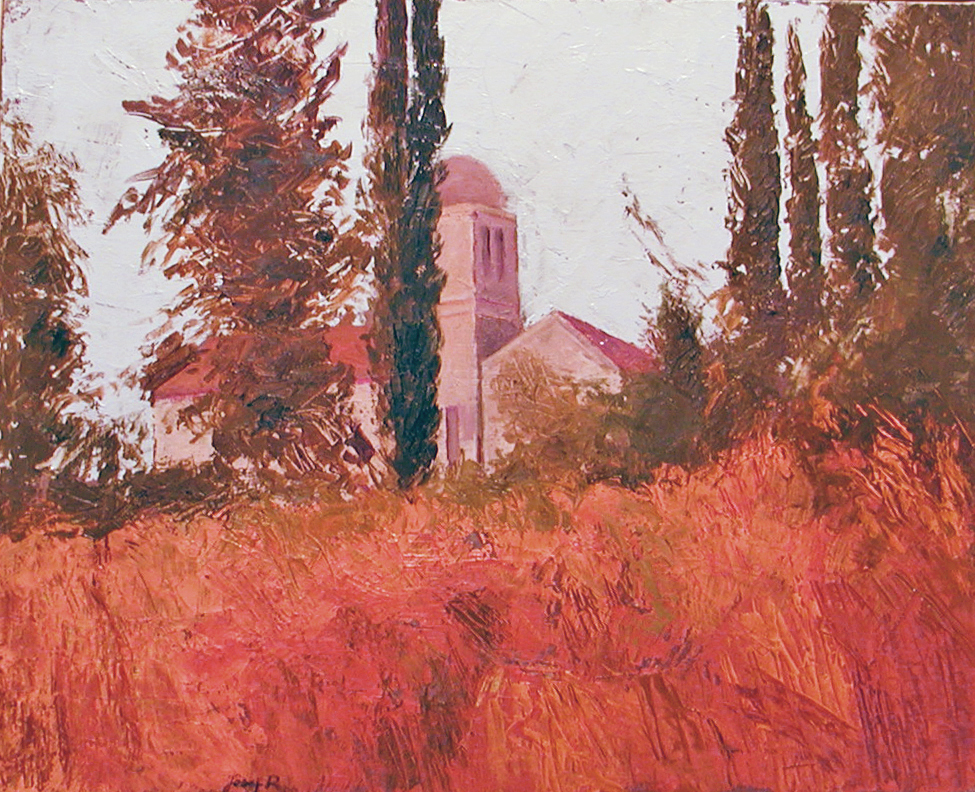
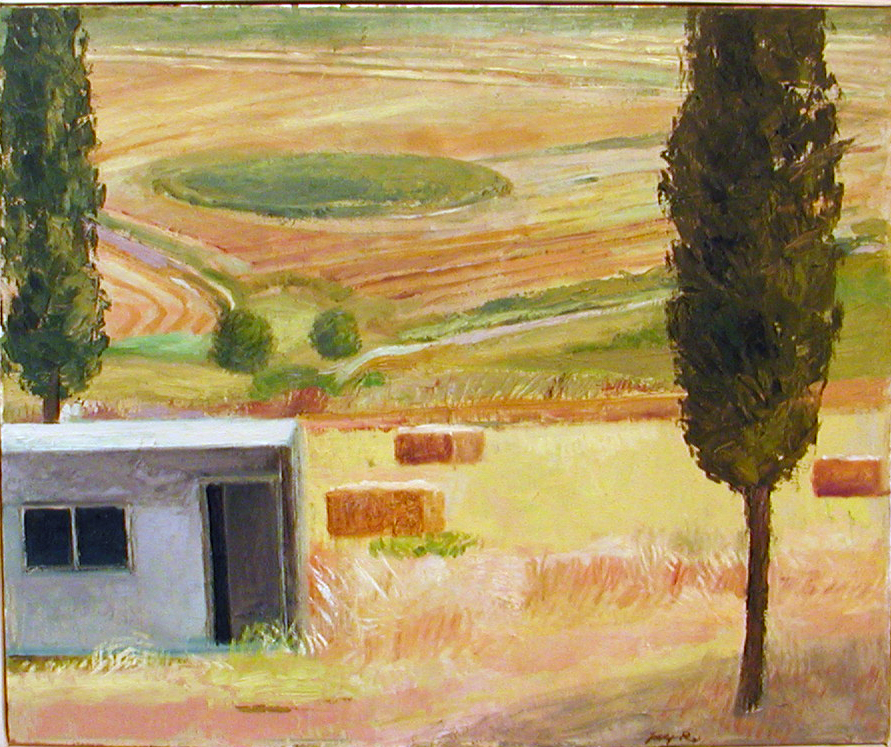
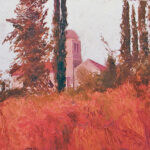
I grew up in Uzhorod — Ungvár in Hungarian — a small, picturesque town in the foothills of the Carpathian Mountains, on a border that shifted between empires so often that my mother was born Czech, and I a citizen of the former USSR. I didn’t know then how beautiful it was: forests, rivers, ponds, and hills, an enchanted landscape I only came to treasure later.
Around the age of ten, walking home along the river Uz, I came upon a man performing what seemed to me a strange and wonderful ritual. He unfolded a curious box on telescopic legs — a portable easel, I would learn much later — and began laying down marks in black charcoal, conjuring the buildings, trees, and water of the far bank, even the reflections. When he opened his little tubes and began to apply color, I stood transfixed. It was a shock of recognition. I cannot say that single moment made me a painter, but it was exactly that kind of wonder that led me, in time, to the decision.
I emigrated to Israel at twelve, and my life changed entirely — new continent, new language, new light. It would take many years more before I formally enrolled, at twenty-six, at the Avni Institute of Art. I have never stopped studying since.
Soon after, I began to teach — first children, then adults — and over the decades I developed a teaching approach rooted in the psychology of perception, drawing on the work of Rudolf Arnheim, whose lectures I was fortunate to attend. Teaching has remained at the heart of my life ever since.
My work and my thinking are shaped by a philosophy that blends contemplative traditions East and West — a sense of the unity of all things, a belief in quiet magic, and a gratitude for the God of small things and their abundance. This is the spirit behind The Tao of the Flowing Brush.